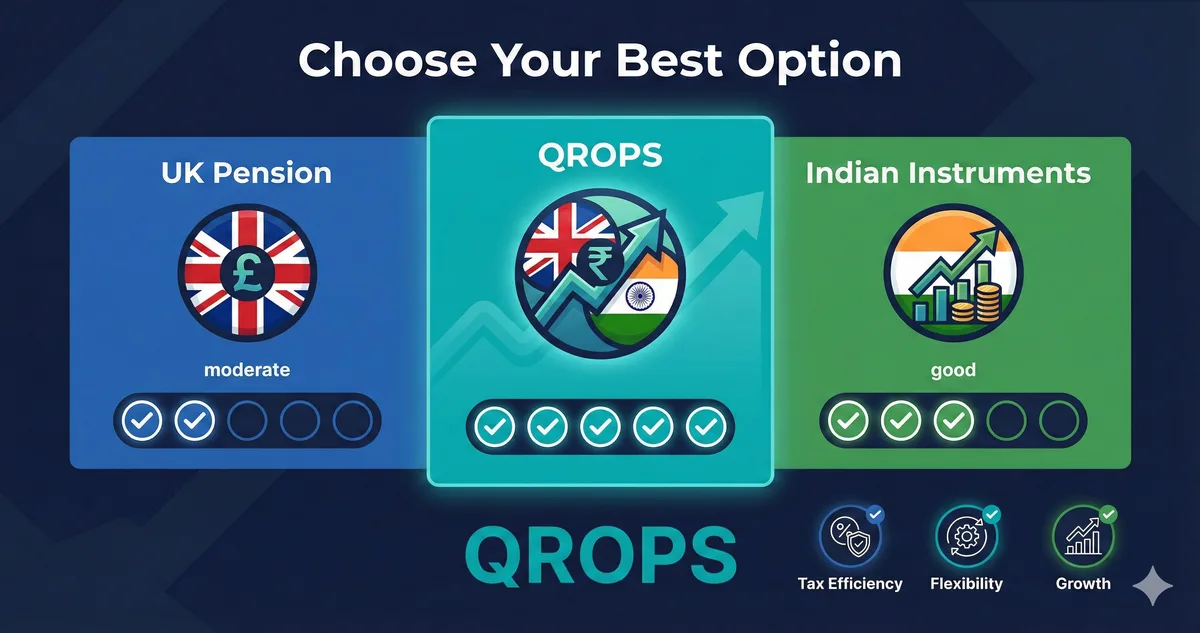
Is a QROPS transfer better than keeping a UK pension?
Neither option is automatically better. Compare the pension you hold with the exact receiving scheme being proposed. Your existing guarantees, retirement plans, costs and residence all matter. Moving to India does not by itself mean you need to transfer.
Compare the features that affect your retirement
| Question | Keep the UK pension | Consider an overseas transfer |
|---|---|---|
| Existing benefits | Check the income promises, increases and dependant benefits you retain. | Identify every benefit you would give up and what replaces it. |
| Costs | Get the current annual charges and overseas payment costs. | Add advice, setup, administration, investment and currency charges where applicable. |
| Currency | Ask how payments reach your bank and how conversion is priced. | Check the scheme's actual currency and investment choices. Overseas does not automatically mean rupee income. |
| Access to income | Confirm the retirement age and withdrawal options available under your scheme. | Read the proposed scheme's access rules, income terms and restrictions. |
| Tax | Have income and estate consequences reviewed for your residence and circumstances. | Assess transfer charges as well as later payments; moving a pension does not remove every UK tax consideration. |
| Protection | Check the named provider, product and applicable compensation arrangements. | Check the receiving jurisdiction, provider and advisers separately; protections can differ. |
When keeping the pension deserves particular attention
Look closely at valuable guarantees, low existing charges and benefits that cannot be replaced. The FCA says most people are best advised to keep a defined-benefit pension. Obtain the appropriate advice before giving up safeguarded benefits.
When an overseas scheme may be worth comparing
A proposed scheme may offer features relevant to your long-term retirement plans. Ask the provider to explain those features in writing and compare them with your existing pension after all costs. Check membership eligibility, transfer acceptance and the current ROPS notification-list entry.
Does an overseas transfer avoid UK tax?
Do not assume that it does. An overseas transfer charge can apply, and some subsequent payments may remain taxable in the UK. Use the GOV.UK transfer guidance and obtain advice on both countries' rules for your circumstances.
What should a written comparison include?
- The exact names of your existing and proposed schemes.
- Benefits retained or lost, with any guarantees clearly identified.
- First-year and ongoing costs, including commissions and currency charges.
- Income illustrations with their assumptions, rather than promised returns.
- Tax, provider acceptance, advice and protection checks.
- How either option fits possible future changes in your residence.
Use our fee checklist to organise costs and our transfer process guide to understand the steps.
Discuss your starting point
MII Solutionz can help organise your pension information and coordinate the next steps. Request a free initial assessment and review our service scope.